
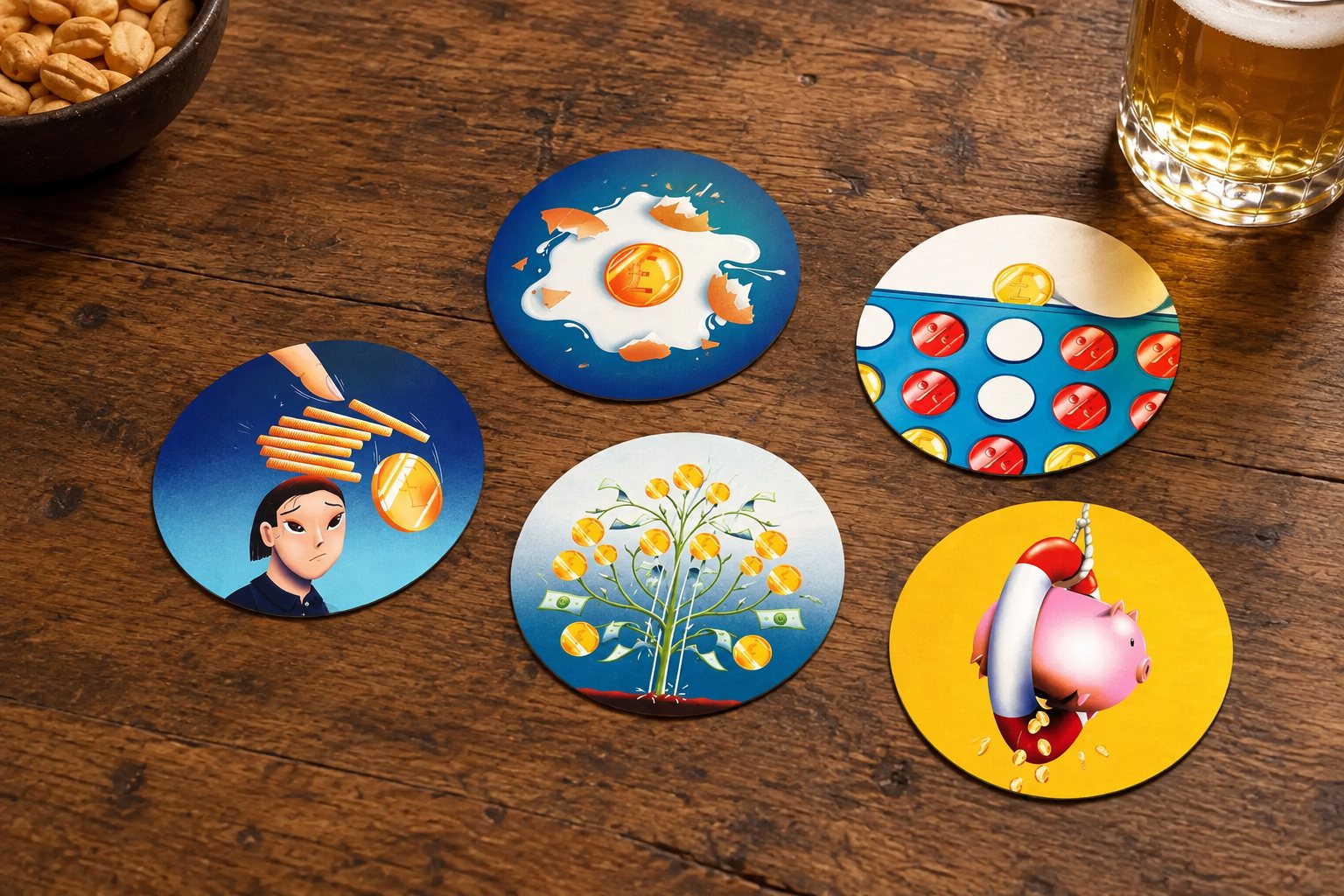
Say It Over a Drink: debt coasters
Lowell has rolled out 25 pub coasters by five illustrators to prompt conversations about money and break the stigma around debt.
Lowell has launched ‘Say It Over a Drink’, a campaign that places 25 illustrated coasters in pubs, cafés and restaurants across the UK to encourage people to open up about debt. The idea: a quiet object on a table can prompt a private, gentle conversation in a low‑pressure setting where a billboard or poster would feel intrusive.
Why a coaster works
The campaign swaps shouty advertising for something that sits on the table and waits. A coaster is touched, picked up and fiddled with during lulls in conversation — moments when someone might be more ready to admit a money worry. That subtle timing is the whole point: prompts arrive when people are already catching up, not when they’re put on the spot.
Design and prompts
Five illustrators — James Cluer, Emily Birch, Sam Peel, Ery Burns and Becky Mann — created the 25 designs. The images are deliberately non‑threatening (a fortune teller, an empty wallet, a person pushing a coin up a hill) and pair with simple conversation starters such as “Is debt on your mind lately?”, “What’s your biggest money worry?” and “That debt still stressing you out?”.
Lowell describes itself as Europe’s leading credit management company and says it has helped over 3.5 million customers become debt‑free since its founding in 2004. The coaster concept grew from research among 300 customers that found one in four would rather talk to family about sex than debt, and 69% would prefer their search history leaked than reveal their bank balance — statistics that underline how much stigma surrounds money talk.
“A coaster might seem like an unusual place to tackle debt, but that’s exactly why it works,” said John Pears, UK CEO at Lowell.
The campaign is a reminder that design and placement matter when you’re trying to break a taboo. For anyone worried about money or supporting someone who is, the coasters aim to make the first sentence easier to say — and that first sentence often opens the door to getting help.
Something wrong on this page? Tell us and we will fix it.