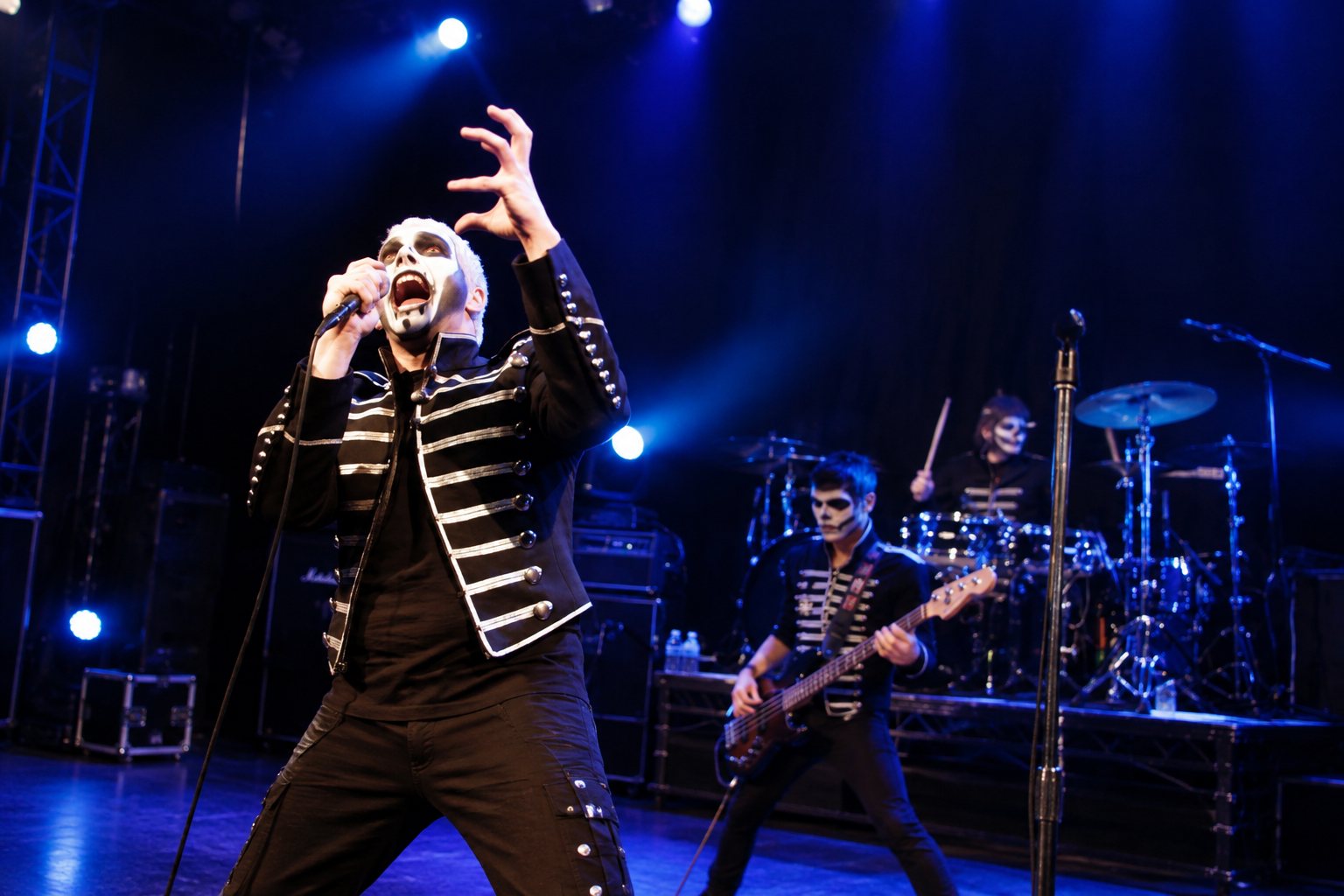
My Chemical Romance: The Black Parade
My Chemical Romance’s The Black Parade (2006) turned personal darkness and a haunted LA mansion into a theatrical, still-essential rock classic.
My Chemical Romance — The Black Parade (2006) is the album that pushed a tight-knit emo act into arena-scale ambition, and two decades on it still matters because it turned private struggle into a public, defiantly theatrical triumph.
The band left New Jersey and holed up at the Paramour Mansion in Los Angeles to make the record; the house’s creepy reputation and the members’ real mental-health and addiction battles seeped into the music. Gerard Way recorded the sleep-terror dialogue that opens "Sleep" after waking in a cold sweat; bassist Mikey Way, who was struggling with depression and alcohol, temporarily left to seek help — a crisis that feeds the album’s closing honesty on "Famous Last Words." Drummer Bob Bryar and guitarist Ray Toro also reported strange occurrences while working in the mansion.
Musically the group broadened its palette. Where earlier records leaned on punk grit, The Black Parade freed the band to embrace a more expansive, classic-rock sensibility — nods to David Bowie and Pink Floyd’s concept-era ambition are clear — and producer Rob Cavallo helped reshape the centrepiece. "Welcome To The Black Parade" began life as a punk song called "The Five of Us Are Dying," then grew into the sweeping opening-piano moment that fixes the album’s narrative around a dying protagonist called The Patient.
The record alternates arena-ready anthems and fragile vignettes: "Dead!" and "Teenagers" bring sardonic swagger ("Teenagers" was written as a societal critique), while "I Don’t Love You" and the piano-led "Cancer" hold quiet, emotional space. "Mama" even pulls in a cameo from Liza Minnelli for a wildly theatrical turn. The band leaned into the imagery on stage, adopting full Black Parade regalia for a tour that, despite injuries and illnesses, cemented their superstar status.
"I am not afraid to keep on living" — the band
Not everyone welcomed the shift: conservative critics mocked the band, and tabloids tried to frame the group as dangerous. My Chemical Romance replied plainly that the album’s core is hope and resilience, not nihilism. Two decades later The Black Parade still feels like a rare example of grandeur used to address real pain — cathartic, melodramatic and unmistakably human.
Fans should care because the album remains a blueprint for turning personal darkness into communal, theatrical release — a record that birthed a generation of ardent listeners and still sounds like an act of survival.
Something wrong on this page? Tell us and we will fix it.