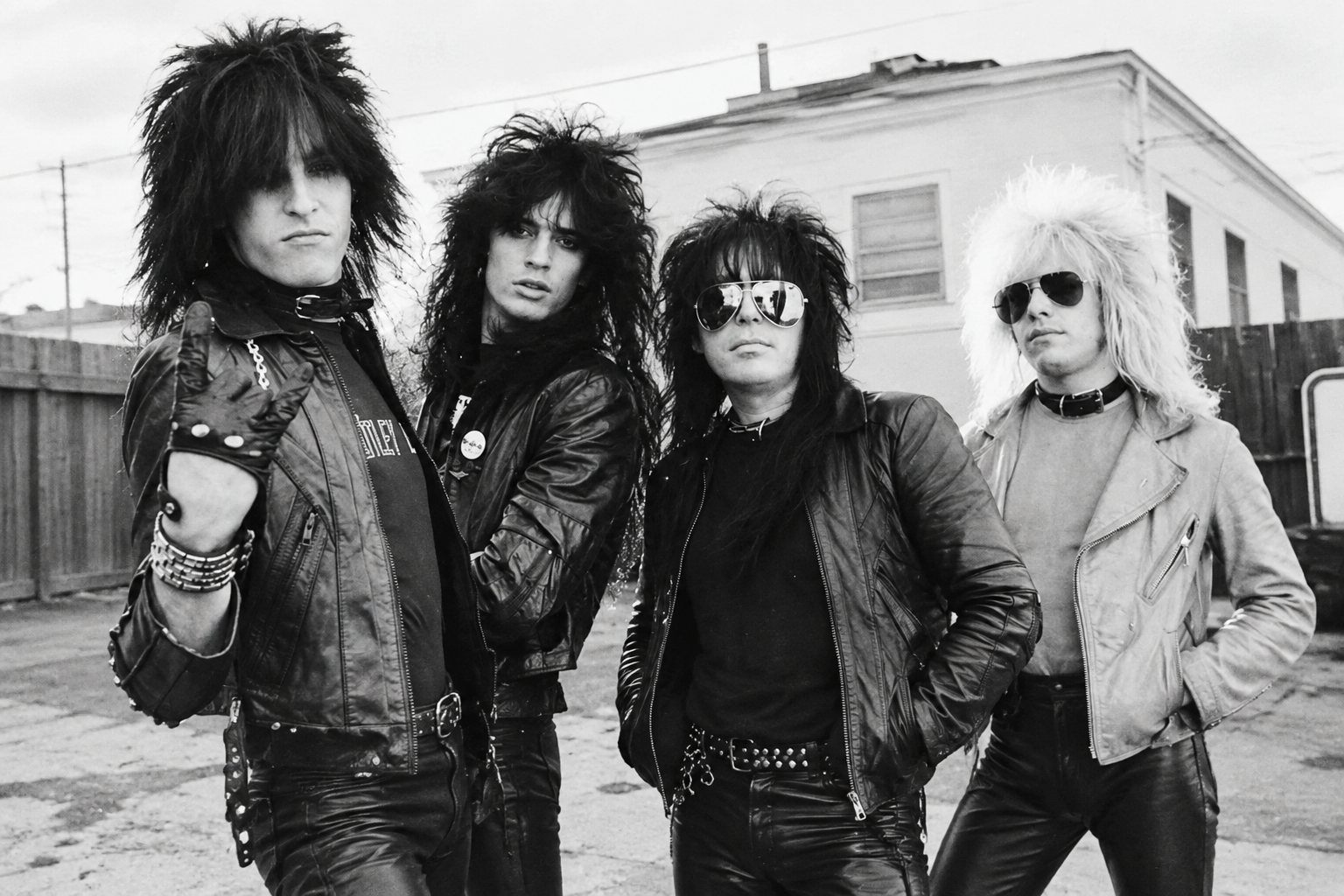
Mötley Crüe — Too Fast For Love (1981)
Mötley Crüe's debut Too Fast For Love (November 1981) was self-produced on Leathür Records, pressed in 20,000 copies and later remixed by Roy Thomas Baker.
Mötley Crüe's debut album Too Fast For Love was released in November 1981. Its scrappy origin—self-produced, tracked in three days for just $2,500 and issued on the band's own Leathür Records—helped define the sound that would become 1980s hair metal.
The quartet—Vince Neil, Nikki Sixx, Tommy Lee and Mick Mars—were still unsigned and barely a year into working together when they cut the record. With management from Allan Coffman, a former construction worker, the band were surviving on tiny paychecks (they were being paid $20 a week) and hustling for shows. Money was so tight that getting studio time required creative barters; Tommy Lee volunteered his way onto the schedule to win the band time in the booth.
Only 20,000 copies of the original Leathür pressing were made. The band treated the record more like a demo tape than a polished debut, and that rawness became part of its appeal. When Elektra later signed the group they brought in Roy Thomas Baker—known for his work with Queen—to remix the tracks at Cherokee Studios. The remixed edition widened the album's reach, but the band and many fans still prize the raw Leathür sound.
“We were one of the first bands to take punk and mix it with glam and metal. We started a whole new trend.” — Vince Neil
That claim isn't theatrical hype so much as a shorthand for what Too Fast For Love offered: punk energy, glam sleaze, and metal riffing packaged with an image and stage show that other bands would quickly emulate. Songs from that debut remain staples of Mötley Crüe sets, underlining how much of a band's identity is captured on its first record. As Neil puts it, the group had years of life experience to draw on for a debut; later records have a different pressure and polish.
For rock listeners today, the album matters for two reasons. Musically, it's an origin point for a widely copied 1980s sound; culturally, it shows how a ragged, self-financed project can be amplified by a major-label remix and reach a mass audience. Too Fast For Love is both a time capsule and a template—the loud, unapologetic blueprint for hair metal's boom.
Something wrong on this page? Tell us and we will fix it.