
Gaia Alari: Wobbly, Tactile Drawings
Gaia Alari’s handmade animations and drawings — used by Coldplay and others — put tactile linework back into commercial and gallery work.
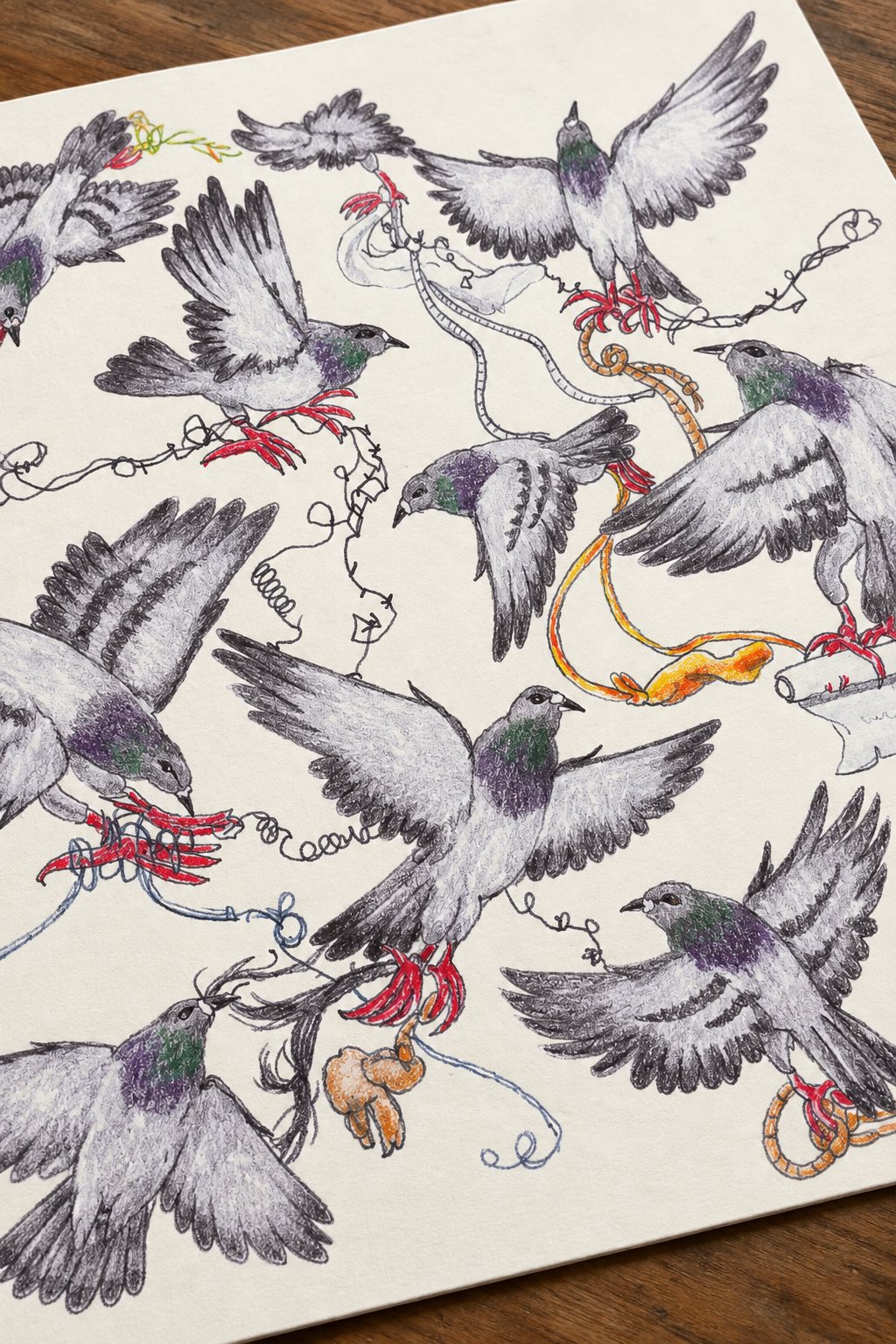
Gaia Alari’s work feels physically made: wobbling pencil lines, charcoal smears and crosshatching that keep the human hand visible in every frame. That tactile quality is why music fans should pay attention — her animations and visual direction have been commissioned by Coldplay, Beats by Dre, Subpop and Warner, bringing a raw, hand-drawn aesthetic to large audiences.
Alari builds images from paper up. She begins with a concept, makes the first marks on negative space and lets characters emerge as if playing an internal game of exquisite corpse. The result is work that looks improvised and intimate without losing narrative control; when needed she storyboards and plans, but always leaves room to wander.
Her MoMA piece How does your body react to art? visualises the body as a shifting, dreamlike character and was made from roughly 1,200 charcoal and oil pastel drawings; the film became a Vimeo Staff Pick. For The New York Times Magazine she collaborated with art director Annie Jen to illustrate Sam Anderson’s essay Walnut and Me — a project that taught her to pace images beside words with a “minimalistic children’s book quality.” And yes: dogs recur. “I just love dogs.” — Gaia Alari
Alari’s route here wasn’t straight. Trained in medicine, she taught herself to draw and animate, moving from still paper images into frame-by-frame animation, clay work and video installations. Over six years she grew from solo freelancer into director and art director on bigger commercial and film projects, keeping her preference for handmade techniques even at scale.
Her influences are resolutely visual: museums, art catalogues and early encounters with Kandinsky’s Point, Line to Surface. Folk tales and archetypes also thread through her pieces, a way to name feelings rather than explain them. Recent and upcoming work includes an emotionally heavy New Yorker piece about AI’s creep into grief and memory, a high-fashion collaboration and her most ambitious film yet — an 8-minute-30 hand-drawn short titled What Comes at Night, in which an insomniac’s sleeplessness first becomes a goldfish and then a leviathan.
For listeners and viewers tired of slick, generative polish, Alari’s drawings are a reminder that the human mark — imperfect, smudged and alive — still carries power in music video, editorial illustration and gallery animation.
Something wrong on this page? Tell us and we will fix it.